
Build belief, not hype

Smart people and marketing.
Two words that don't always sit comfortably next to each other.
I reckon that, if you’re reading this, there's a good chance you know your subject inside out.
Like so many folks here at the Happy Startup School, you’ve done hours of training, research, personal reflection, all the good stuff. You could talk about what you do for hours over a cup of tea and a slice of cake.
But when it comes to actually telling other people about it? As in, so that they can buy from you?
I’ve noticed that that's where things tend to get uncomfortable.
People tense up.
Clam up.
And, time after time, give up.
I’ve been recommending Billy Broas’s book, Simple Marketing for Smart People, to people in our community for well over a year now.
It’s becoming a bit of a standard joke, tbh: “Have I told you about Simple Marketing for Smart People yet?”, like I’m on commission (I am not on commission. Honest.)
I keep coming back to it because so many of the people I talk to are brilliant at what they do but find the whole marketing thing really icky, manipulative… Just plain yuck.
Billy’s work offers a different path. One that starts with actually respecting the intelligence and dignity of the people you're trying to reach, rather than trying to hack their psychology.
And one that, just as importantly, helps you to get clear on why you do what you do before worrying about where to post about it.
So when Carlos sat down with Billy for a one-off Fireside this week, it was like Christmas came early for me.
Billy is a scientist-turned-entrepreneur who built a beer-brewing business from his kitchen, grew it into a full-time income, and has now pivoted into helping other smart business owners find the words for what they do.
(A scientist who became an entrepreneur? No wonder he and Carlos got on!)
This one’s for you if…
You’ve always struggled with marketing, but haven’t been quite sure why
You’re feeling confused or uncertain about what to create and where to post it
You want to attract the right people without resorting to hype, urgency tricks, or manipulation
You’re a subject matter expert who’d rather let the work speak for itself (but you know it can’t, damn it)
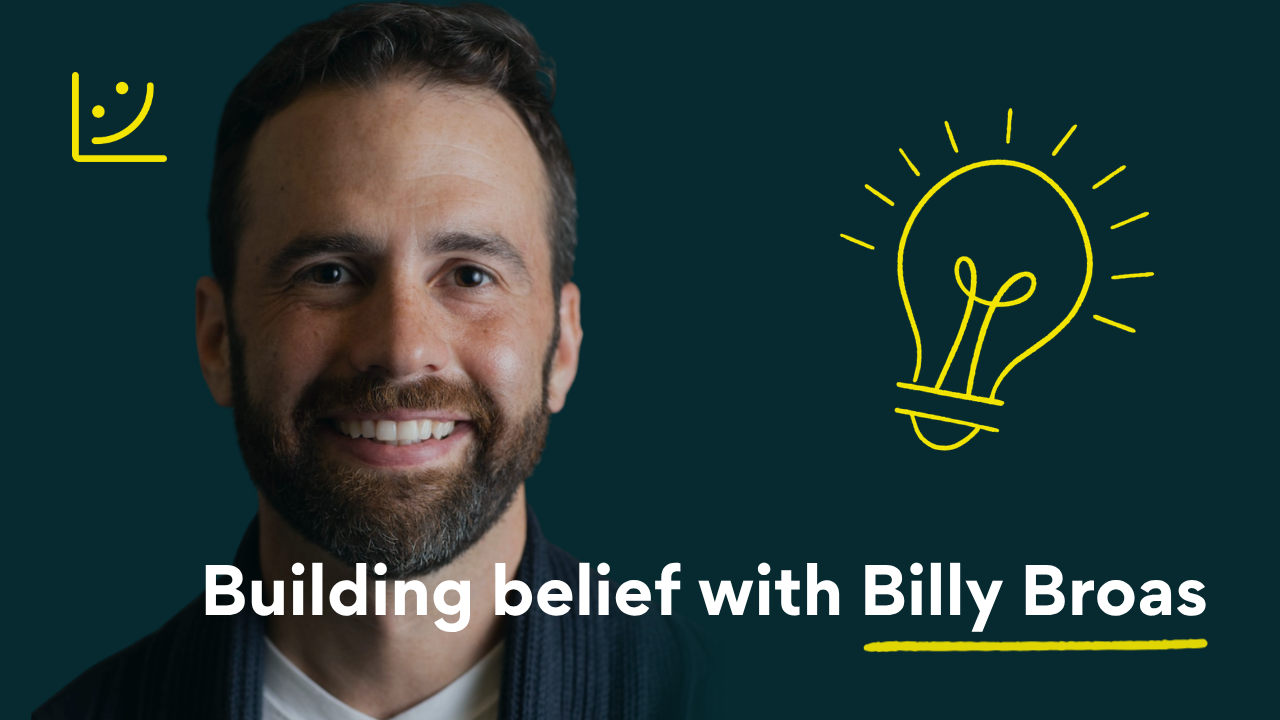

Here are 9 takeaways from the conversation.
1. The smartest people often struggle most with marketing
Billy didn’t start in marketing. He started in clean energy, with an MBA and a science background.
But when he launched his beer brewing courses and needed to actually sell them, he hit a wall. All the marketing advice felt overwhelming, manipulative, or just plain irrelevant to someone running a small, purpose-driven business.
This is the paradox at the heart of his book: the smarter you are and the more deeply you understand your subject, the harder it can be to explain it clearly to someone who doesn’t share your expertise. You’re just too close to it.
And most marketing advice assumes you’re running a corporation, not a one-person operation built around something you care about.
2. Go upstream, not downstream
So much of what passes for marketing advice is about tactics. What’s the optimal length of a LinkedIn post? How many hashtags? What time should you publish? Billy calls this “downstream” thinking, and it’s where most of us get stuck.
The real work happens upstream: getting clear on your core message.
What is it that you actually believe about how people should approach the problem you solve? Once you have that, the downstream stuff becomes much simpler, because you're just finding different channels to say the same thing.
As Billy put it, whether he’s at a conference or posting on LinkedIn, the argument stays the same. The channel is just the delivery mechanism.
3. Marketing as argumentation, not manipulation
When Billy says “argument”, he doesn't mean conflict or shouting matches (thank god). He means it in the philosophical sense: putting forward a reasoned case for your way of doing things.
This distinction really matters.
Most marketing advice draws on behavioural psychology and cognitive biases.
It tells you to spike dopamine, trigger loss aversion, and create urgency. No wonder our skin crawls.
Billy points out that this approach treats people like programmable animals, and the best copywriters have always known that the real skill is in constructing a clear, well-evidenced case for something you believe in.
That is argumentation, and it’s been around for over two thousand years. Long before anyone invented a blooming sales funnel.
4. Start with dignity
Here’s the bit that made me fall in love with this work. Billy’s entire approach rests on one foundational idea: that people are born with inherent dignity. It can’t be given or taken away.
If you start there, everything else follows.
You have to treat people as if they have free will and agency. You have to assume they’re capable of weighing up the options and making a good decision for themselves.
And you realise how much mainstream marketing advice is designed to bypass exactly that.
The manipulation playbook doesn’t want customers thinking. It wants them clicking “buy now” on autopilot. Eesh.
Billy’s approach says, ‘speak to people's better nature instead, and trust them to choose.’
Doesn’t that feel so much better already?
5. The beer palate story
Billy shared a great, practical example of what an argument actually looks like. When he was running his beer-brewing business, he started out with the usual features-and-benefits approach: learn to brew great beer, it’s easy, cleanup’s a breeze.
But when he became a certified beer judge and trained his palate, he noticed something.
Learning to taste the difference between tropical hops and grassy hops, between drier and sweeter, made his own brewing dramatically better.
So he made a new argument: the best way to improve your beer is to improve your palate.
He backed it up with evidence, addressed objections, and brought in a perfumer to show that palate training is a learnable skill.
That is a real argument, with a claim, evidence, and responses to objections.
And it worked far better than listing features ever did.
6. Bridge the gap between “is” and “ought”
Billy introduced a philosophical idea that Carlos really connected with: the distinction between is and ought, borrowed from the philosopher David Hume.
Scientists describe what is. This fuel has these properties. This research shows these results.
But description alone doesn't tell anyone what to do. That's the “ought” .. and it's where the argument comes in.
Many expert founders assume the facts speak for themselves, that if people just understood their breakthrough, they'd get it.
But customers need someone to bridge the gap: here's what I see, and here's what I think we should do about it.
7. What do people need to believe?
One of the most practical ideas from Billy’s book is the “ladder of importance”.
It asks, ‘What does someone need to believe is important before they'll fully value what you offer?’
You probably know that the thing at the top of your priority list is crucial to your customers’ success.
But they might not see it that way yet.
Their priorities might be completely upside down, at least from where you're standing.
Your job as a marketer isn't to shout louder. It's to help rearrange what people believe matters through careful, evidenced argumentation.
When someone's priorities shift, the sale follows naturally.
8. Concessions make your argument stronger
This was a real lightbulb moment for me in the conversation.
When you put forward your argument, it’s tempting to make big, sweeping claims. Billy says, ‘Don't.’ The strongest arguments include qualifications and concessions.
Instead of saying “this works for everyone, all the time”, you say “if you’re in this situation, and your goal is this, then here’s what I’d recommend.”
You acknowledge where the alternatives work.
You refer people elsewhere when they're not a fit.
And far from weakening your position, this makes it more credible.
People see right through blanket statements. And a well-scoped argument shows you actually understand the landscape.
9. Argue for your beliefs, not your credentials
Someone in the live chat asked how you can make an argument when you're just starting out and nobody knows who you are.
Billy’s answer was wonderfully freeing: you don't need to be well-known.
You need to have a recommended way of doing things.
Leading with credentials (here are my logos, my testimonials, my years of experience) is less compelling than leading with your process and why you believe it works.
The credentials come after, as supporting evidence.
So even if you're brand new, you can put forward a clear argument for your approach.
And that keeps things honest on both sides, because you genuinely need to have thought deeply about what you recommend and why.
This conversation reminded me why I keep pressing Billy’s book into people’s hands.
(Almost literally: I just told someone about the book and shared the Crowdcast link this afternoon!)
For so many of us in this community, marketing feels like selling your soul, one pound of flesh at a time.
In the face of that, Billy’s work makes me drop my shoulders and exhale with relief.
Getting clear on what we believe and making a case for it, with respect, with evidence, and with the humility to say, “This might not be for you.” .. well.
That feels like an approach worth arguing for.

Putting your work out in the world is one of the cornerstones of our Happy MBA, which starts in October (enrolment now open).
Are you in transition and want to create a life you love?
Rediscover your best self in the company of fellow travellers, and build your next chapter on purpose.
Notes
Many thanks to Billy for his time. You can find his book, Simple Marketing for Smart People, wherever you buy books. His newsletter and manifesto on ethical marketing are at billybroas.com and marketingisanargument.com.